If you’ve ever sat down to plan your phonics small groups and thought…
What skill should I teach next? What should I use for practice? How do I make sure this all connects?
You’re not alone.
For years, I felt like I was constantly piecing together phonics instruction—pulling fluency from one place, decodables from another, and word work from somewhere else entirely.
It worked… but it was exhausting.
And honestly? It didn’t always feel cohesive for my students or my cute little ADHD brain.
The Problem with Most Phonics Small Groups
Most phonics instruction ends up feeling disconnected because:
Skills aren’t reinforced in multiple ways
Practice isn’t aligned
There’s no consistent structure across groups or instruction
So even when you’re working hard… it can feel like your students aren’t making the progress you know they’re capable of.
What Actually Works: A Simple, Connected System
Everything changed for me when I stopped thinking in terms of activities and started thinking in terms of a system.
Instead of asking:
“What should I do for this group today?”
I started asking:
“How can I reinforce this skill in multiple meaningful ways?”
That’s where this structure comes in:
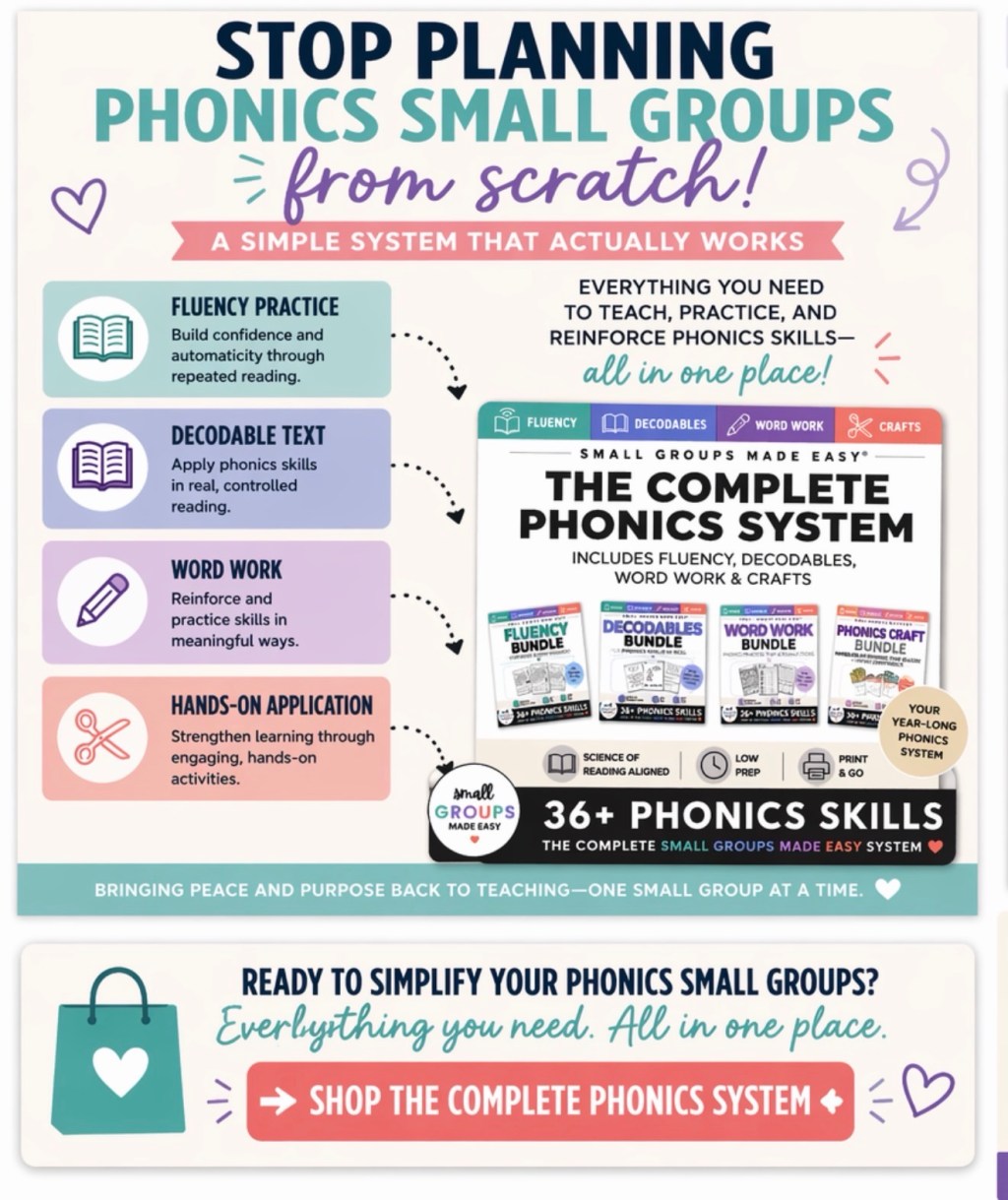
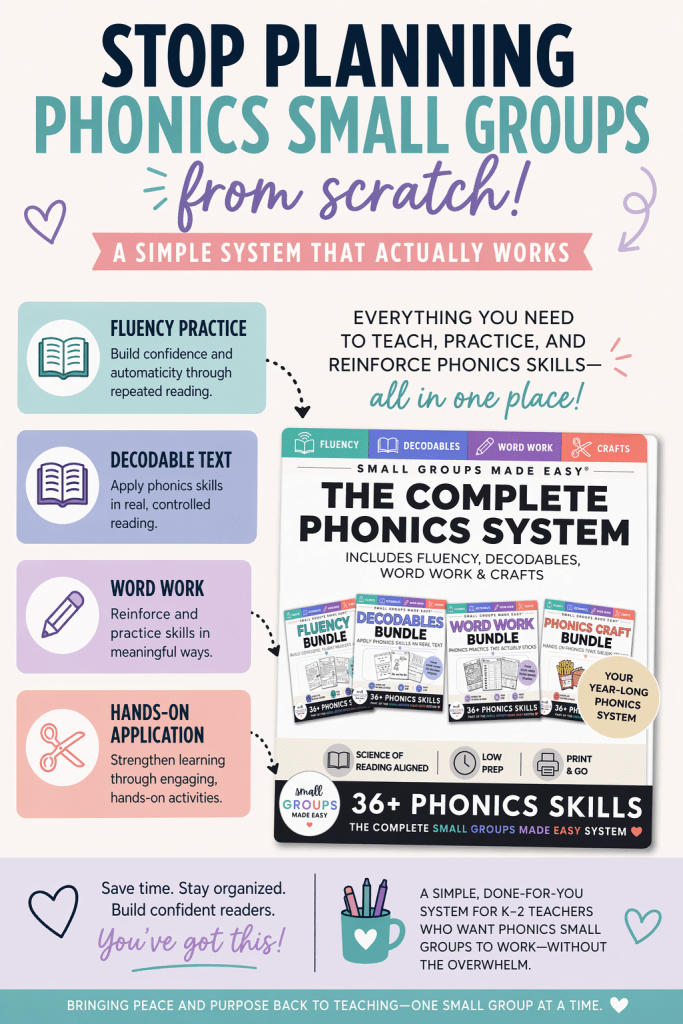
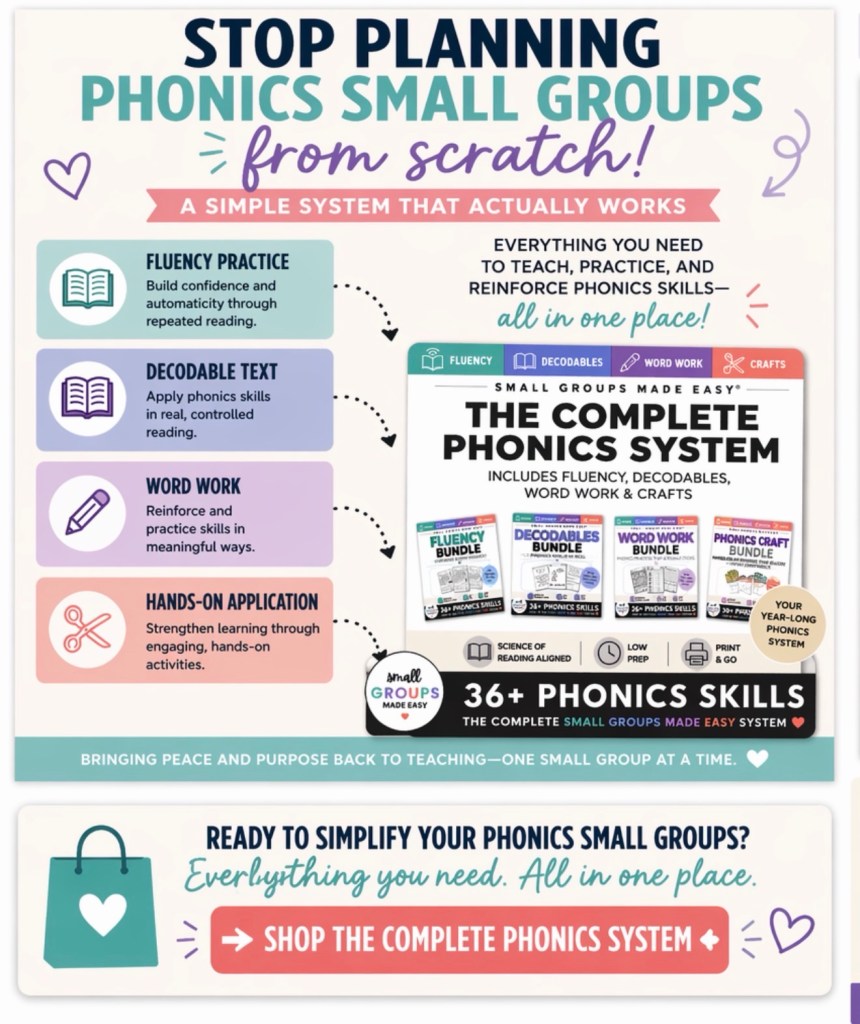
1. Fluency Practice
Students build confidence and automaticity through repeated reading.
2. Decodable Text
They apply the phonics skill in real, controlled reading.
3. Word Work
They manipulate and practice the skill directly.
4. Hands-On Application
They reinforce learning through engaging, meaningful activities.
When all four pieces work together, students don’t just practice a skill—they actually learn it.
A Done-for-You Phonics Small Group System
If you’re looking for a way to simplify your planning and make your small groups more effective, I created a resource that puts all of this together for you.
👉 Small Groups Made Easy Complete Phonics System
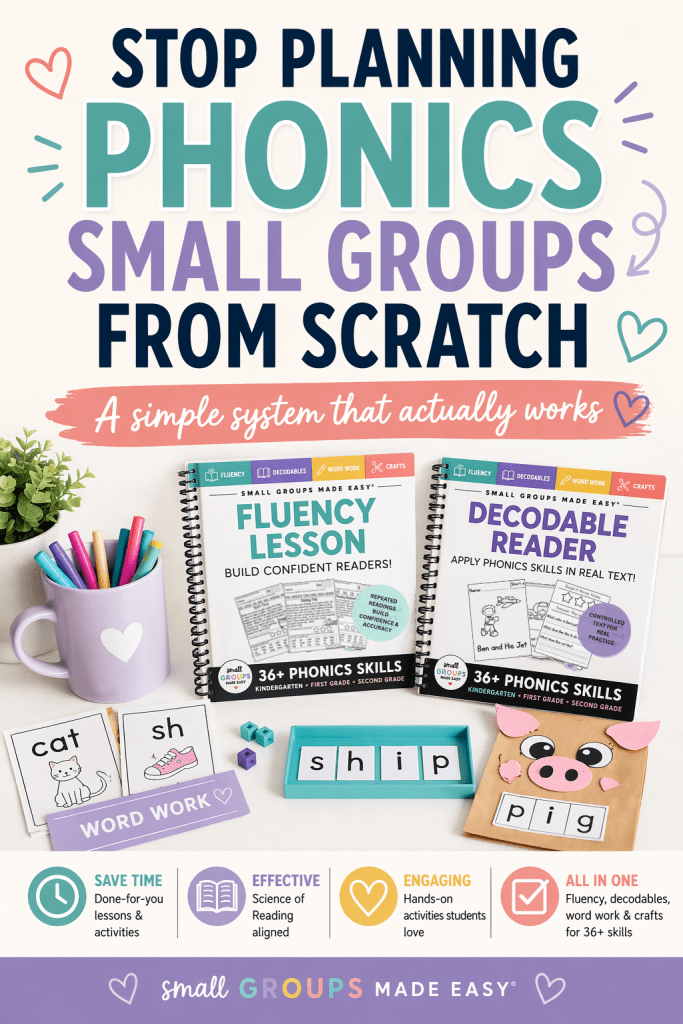
This complete bundle includes:
Fluency lessons
Decodable readers and passages
Word work activities
Phonics crafts
All organized into a year-long system covering 36+ phonics skills.
Everything is aligned, structured, and designed to work together—so you’re not starting from scratch every week.
Why This System Makes a Difference
Teachers love this approach because it:
Aligns with the Science of Reading Works with any curriculum (including 95% programs)
Saves hours of planning time
Provides consistent practice across skills
Keeps students engaged while reinforcing learning
Most importantly, it helps you feel confident that what you’re doing in small groups is actually making an impact.
Not Ready for the Full System Yet?
If you want to see how everything works together before committing, you can start with a free sample:
👉 Short A small group activities (fluency, decodable, word work, and craft)
It’s a simple way to try the system in your classroom and see the difference for yourself.
Final Thoughts
Phonics small groups don’t have to feel overwhelming.
When you have a simple, structured system in place, everything becomes easier:
Planning
Teaching
Student progress
And you finally get to focus on what matters most—helping your students become confident readers.
💛 Bringing peace and purpose back to teaching—one small group at a time.
 Small Groups Made Easy